
NAD+
Dinucleotide coenzyme — not a peptide
Central coenzyme of energy metabolism. It is listed here because of how it is used alongside peptides, but it is worth stating plainly: it is not a peptide.
Back to technical sheets- Class
- Dinucleotide coenzyme — not a peptide
- Also known as
- Nicotinamide adenine dinucleotide; research use only
Mechanism of action
NAD+ acts as an electron carrier in cellular respiration and as a substrate for NAD-dependent enzymes (sirtuins, PARP, CD38). Its levels fall with age in several tissues, which is where the interest in replenishing it comes from. Whether exogenous administration usefully raises intracellular NAD+ is exactly what is under discussion: the molecule is large and polar, and much of the literature studies precursors (nicotinamide riboside, NMN) rather than directly administered NAD+.
Evidence
Under investigation. Human trials with precursors show raised blood NAD+, but the step from that marker to a clinical benefit is not established. Evidence for parenterally administered NAD+ is markedly weaker than for its precursors. Not approved as a medicine for the indications commonly attributed to it.
Studied uses
- Study of cellular energy metabolism (research setting)
- Research on ageing and mitochondrial function
Safety considerations
- Not a peptide: it shares neither their pharmacokinetics nor their handling considerations
- Most human evidence concerns precursors, not NAD+ itself
- Effects attributed to parenteral administration lack solid support
- Not approved to treat any condition
Batch quality data
We publish these figures because they are the ones the program itself teaches you to ask for.
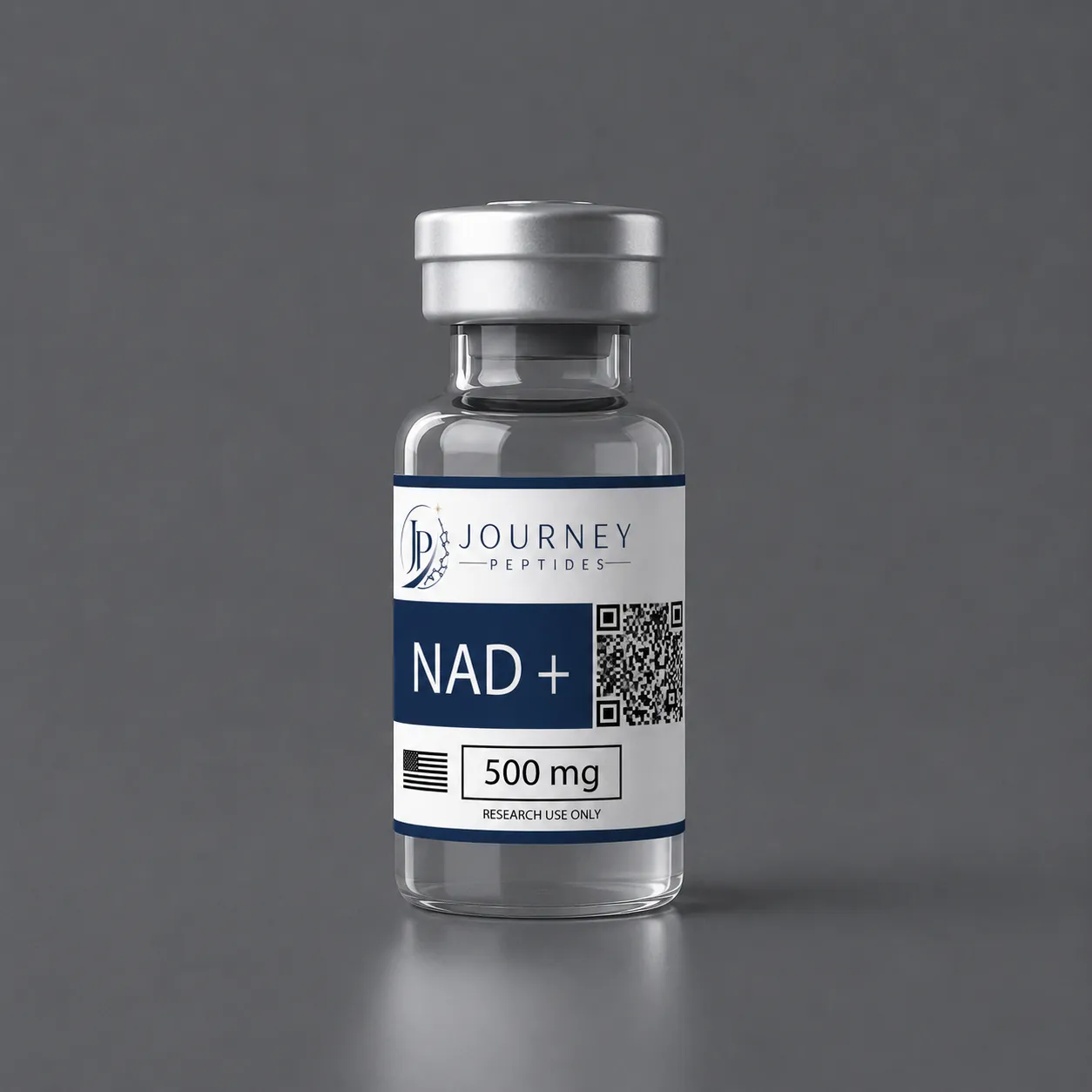
- Presentation
- Polvo liofilizado en vial sellado
Educational reference sheet. It is not a recommendation to use, a clinical indication or a protocol. Many of these compounds are marketed for research use only and are not approved for human use. Always cross-check with the primary literature and the regulation in your country.