
CJC-1295 + Ipamorelina
Combined vial: GHRH analogue and GH secretagogue
A combination of two molecules acting on the somatotropic axis through different, complementary pathways.
Back to technical sheets- Class
- Combined vial: GHRH analogue and GH secretagogue
- Also known as
- Research use only; not approved for human use
Mechanism of action
CJC-1295 is a GHRH analogue that stimulates growth-hormone release through its own receptor; ipamorelin acts on the ghrelin receptor, a different pathway. The rationale for combining them is that two complementary stimuli on the same axis would produce larger GH pulses than either alone. That is a reasonable and frequently cited hypothesis, not a demonstrated trial result.
Evidence
Under investigation. Each component has been studied separately in humans with results on markers such as GH and IGF-1, but the combination lacks clinical trials assessing its efficacy and medium- or long-term safety. Raising a marker is not the same as a clinical benefit.
Studied uses
- Research on regulation of the GH/IGF-1 axis
- Study of pulsatile growth-hormone secretion
Safety considerations
- The ratio between the two components must be stated on the batch certificate
- Stimulating the somatotropic axis has metabolic implications that require professional follow-up
- Particular caution with a history of cancer: the IGF-1 pathway is a growth factor
- Not approved for human use in any indication
Batch quality data
We publish these figures because they are the ones the program itself teaches you to ask for.
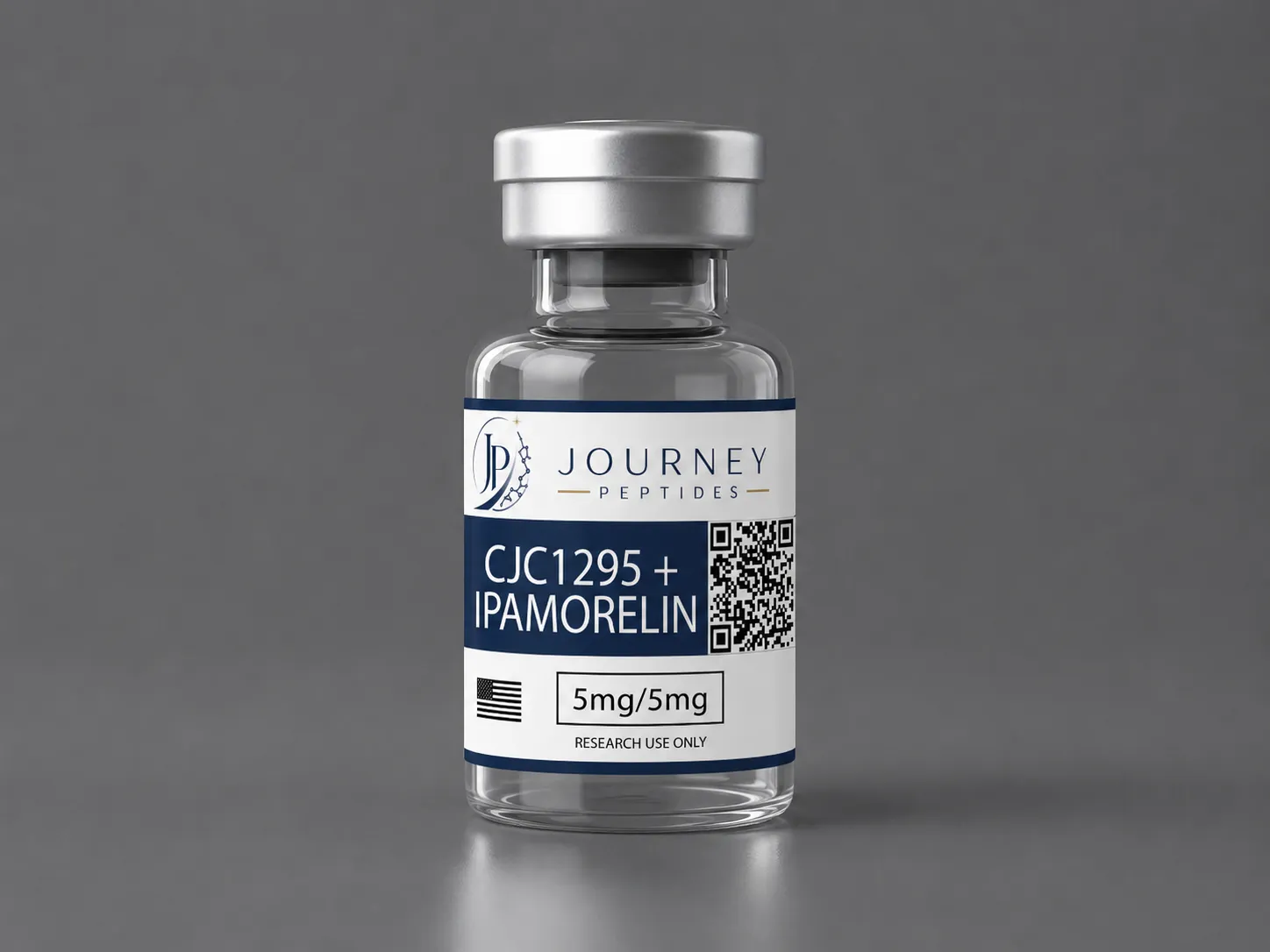
- Presentation
- Polvo liofilizado en vial sellado
Educational reference sheet. It is not a recommendation to use, a clinical indication or a protocol. Many of these compounds are marketed for research use only and are not approved for human use. Always cross-check with the primary literature and the regulation in your country.